

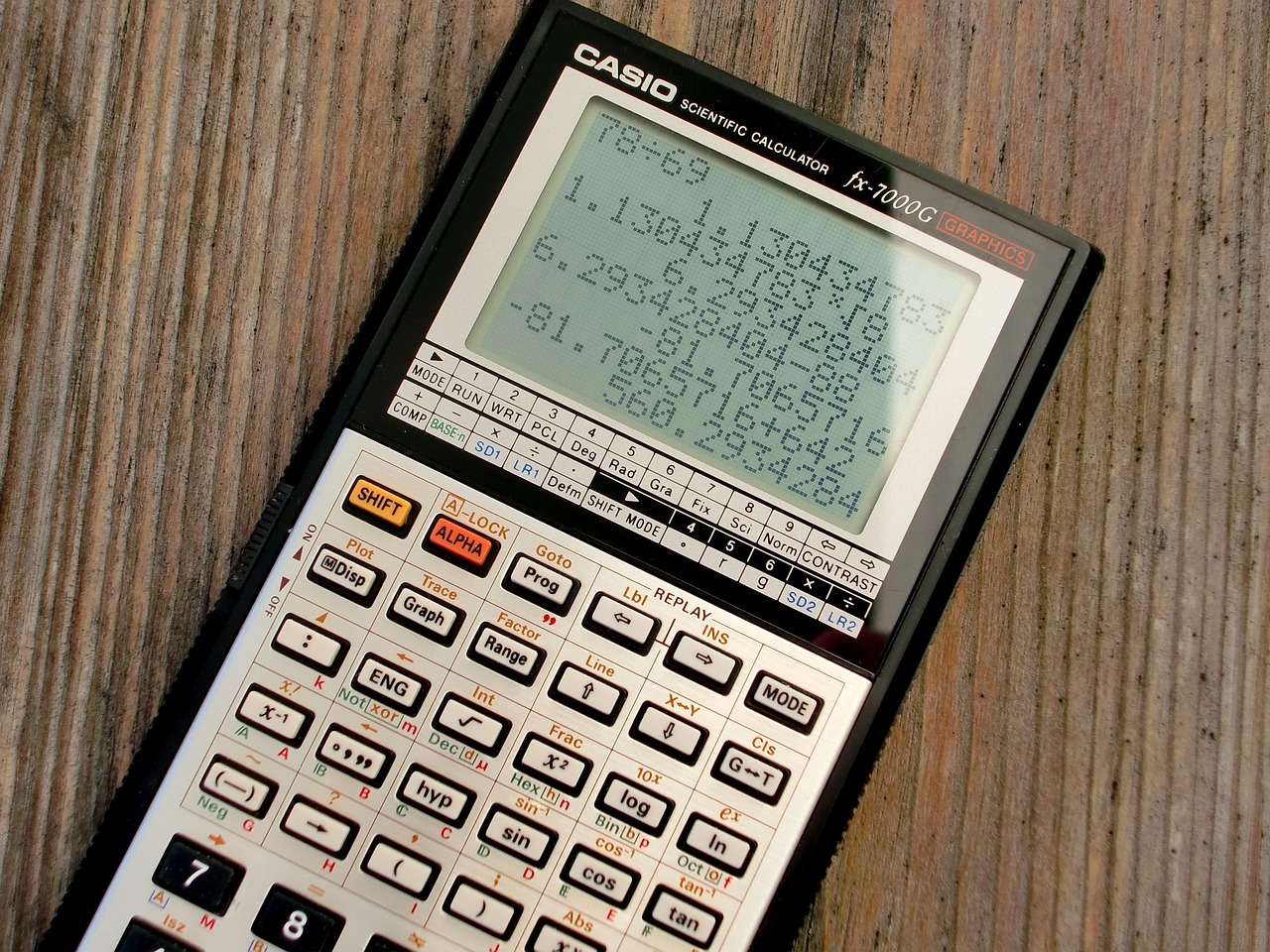
Ever wondered why some designs just feel ‘right’ while others miss the mark? Often, it comes down to proportion. A golden ratio calculator helps you achieve that innate sense of balance, translating an ancient mathematical constant into practical design dimensions.
Key Takeaways
- The Golden Ratio (φ ≈ 1.618) provides a powerful principle for achieving visual harmony in design and art.
- Golden ratio calculators simplify complex calculations, allowing users to quickly find proportional segment lengths based on one input.
- Modern applications extend beyond traditional art to web design, UI/UX, photography, and architectural planning.
- While a powerful tool, it’s crucial to understand the limitations and criticisms of strict golden ratio application to avoid rigid or unnatural outcomes.
- Integrating golden proportions effectively requires balancing mathematical precision with creative intuition and project context.
What Exactly is the Golden Ratio (φ)?
The Golden Ratio, often represented by the Greek letter phi (φ), is an irrational mathematical constant approximately equal to 1.6180339887. It describes a proportion where the ratio of the sum of two quantities to the larger quantity is equal to the ratio of the larger quantity to the smaller one. This translates to the formula (A+B)/A = A/B = φ. Historically, this ‘divine proportion’ has been observed in art, architecture, and nature for centuries. From the Parthenon to Renaissance paintings, artists and builders intuitively or deliberately employed this ratio to create compositions perceived as aesthetically pleasing and balanced. Its pervasive presence, particularly in natural forms like spiral galaxies, seashells, and plant growth patterns, fascinates mathematicians and artists alike. This connection to nature often underpins its appeal in design, suggesting an inherent universal beauty.
How Does a Golden Ratio Calculator Work?
A golden ratio calculator simplifies the process of finding these harmonious proportions. Instead of manual calculations, you input one known value (either the total length, the longer segment ‘A’, or the shorter segment ‘B’), and the calculator instantly determines the missing values that satisfy the golden ratio formula. Most calculators operate in a few modes. You can input a total length (A+B) and get the corresponding A and B segments. Alternatively, if you know segment A, it will calculate B and the total. The reverse is also true: input B, and it yields A and the total. In real terms, if you have a line segment of 100 units, a calculator would tell you that the larger segment A is approximately 61.8 units and the smaller segment B is 38.2 units, because 61.8/38.2 ≈ 1.618 and (61.8+38.2)/61.8 ≈ 1.618. This instant feedback is invaluable for quick design iterations.
Practical Applications: Beyond Just Theory
While rooted in mathematics, the golden ratio’s true power lies in its diverse practical applications across various fields. Designers, artists, photographers, and architects use it to achieve visual appeal and structural integrity. In web design, for instance, a golden ratio calculator can help determine ideal content column widths versus sidebar widths. A common approach is to set the main content area to approximately 61.8% of the total width, leaving 38.2% for a sidebar, creating a balanced visual hierarchy that guides the user’s eye naturally.

Photographers often use the ‘golden spiral’ overlay in their viewfinders, a derivative of the golden ratio, to compose shots. This helps place focal points at natural intersections, leading to more dynamic and engaging imagery. Similarly, architects might employ it for facade proportions or room dimensions, believing it contributes to a building’s overall aesthetic harmony, as seen in historical structures like the Pantheon and even modern works.
Choosing the Right Golden Ratio Tool in 2026
The market offers a wide array of golden ratio tools, from simple web-based calculators to integrated features within professional design software. The best choice depends on your specific needs and workflow in 2026. Online golden ratio calculators, like those found on Omni Calculator or Calculator Soup, are excellent for quick, standalone calculations. They are free, accessible from any device, and require no software installation. These are ideal for students or those needing a quick reference. For professionals, integrated features within design software offer greater utility. Tools like Adobe Photoshop, Illustrator, Figma, or Sketch often include grid systems or plugins that can be configured to golden ratio proportions. Golden ratio calculator allows for real-time application directly within your design environment, ensuring consistency across complex projects. Some video editing software even offers golden spiral overlays for composition.
| Feature | Online Golden Ratio Calculator | Integrated Design Software Feature |
|---|---|---|
| Ease of Use | Very High (simple input/output) | Moderate (requires software familiarity) |
| Integration into Workflow | Low (copy/paste values) | High (native grid, guides, plugins) |
| Customization | Low (fixed calculations) | High (dynamic adjustments, presets) |
| Real-time Feedback | No (static results) | Yes (visual overlays, dynamic guides) |
| Cost | Free | Subscription-based (part of design suite) |
Step-by-Step: Using a Golden Ratio Calculator for Your Project
Applying the golden ratio is straightforward with a dedicated calculator. Let’s walk through a common scenario: determining proportions for a responsive web layout.
- Identify Your Known Dimension: Start with the total width of your content area. For example, if your responsive layout has a maximum width of 1200 pixels.
- Choose Your Calculator: Navigate to a reliable online golden ratio calculator (e.g., Omni Calculator, or a similar tool for 2026).
- Input the Value: Enter your known dimension (1200) into the appropriate field. Most calculators will have fields for ‘Total,’ ‘A’ (larger segment), and ‘B’ (smaller segment). Input 1200 into the ‘Total’ field.
- Retrieve Results: The calculator will instantly display the corresponding values for A and B. For 1200 pixels, you’d get approximately A ≈ 741.66 pixels and B ≈ 458.34 pixels.
- Apply to Your Design: Now, you can designate your main content column as 741.66 pixels and your sidebar as 458.34 pixels. This creates a visually balanced layout that adheres to the golden ratio principles.
Worth noting: For fluid or responsive designs, these values serve as a foundational guide. You might use percentages derived from these pixel values (e.g., 61.8% and 38.2%) to maintain the ratio across different screen sizes. For further insights into responsive design principles, see.
The Nuance of Phi: When to Use (and Question) the Golden Ratio
While lauded for its aesthetic appeal, it’s crucial to approach the golden ratio with a nuanced perspective. Not every design problem is best solved by strict adherence to phi, and sometimes, its presence is more coincidental than intentional. Some critics argue that the golden ratio’s perceived omnipresence in nature and art is often a result of ‘cherry-picking’ examples or approximation. According to Keith Devlin, a Stanford mathematician, many supposed golden ratio applications are either inaccurate or stretched to fit the narrative. It’s a powerful tool, but not a magic bullet for all design challenges. The wrinkle here: over-reliance can lead to rigid, unnatural compositions. Human perception of beauty is complex, influenced by culture, context, and individual preferences, extending beyond a single mathematical constant. While it can offer a strong starting point, particularly in layouts and proportions, it shouldn’t override creative intuition or functional requirements.
Common Mistakes When Applying Golden Ratio Principles
Misapplying the golden ratio can lead to designs that feel forced rather than harmonious. One common mistake is attempting to apply it universally to every element, regardless of its function or visual weight. This can result in an overly geometric or predictable feel, stifling creativity. Another error is mistaking approximations for exact adherence. While the Fibonacci sequence (where each number is the sum of the two preceding ones: 0, 1, 1, 2, 3, 5, 8, 13,…) provides numbers that approximate the golden ratio, using only Fibonacci numbers isn’t the same as applying phi directly. The actual golden ratio is an irrational number, and its precise application often involves decimals. A practical solution involves using the golden ratio as a guide rather than a strict rule. For example, when designing a logo, instead of forcing every curve and line to match phi, focus on the overall proportion of key elements. Golden ratio calculator allows for flexibility while retaining a sense of balance.

Expert Tips for Integrating Golden Proportions Effectively
Integrating the golden ratio effectively means understanding its strengths and knowing when to deviate. Here are some expert insights:
- Start Broad, Refine Later: Apply the golden ratio to major compositional elements first, like overall page layout or the primary focal point of an image. Then, use your eye to refine smaller details.
- Combine with Other Principles: Don’t let phi be your only guide. Combine it with principles like the Rule of Thirds, symmetry, asymmetry, and contrast to create richer, more dynamic compositions.
- Consider Context: A design for a playful children’s app might benefit from more organic or whimsical proportions, while a luxury brand website could use the golden ratio’s inherent sophistication.
- Test and Iterate: Use A/B testing in web design to see if golden ratio-based layouts actually perform better in terms of user engagement or conversion, rather than assuming aesthetic superiority.
- Explore the Golden Spiral: Beyond simple linear divisions, the golden spiral offers a powerful tool for dynamic compositions, guiding the viewer’s eye through a piece. Many image editors include this overlay.
Frequently Asked Questions
What is the golden ratio formula?
The golden ratio formula is expressed as (A+B)/A = A/B = φ, where φ (phi) is approximately 1.618. It states that the ratio of the sum of two quantities (A+B) to the larger quantity (A) is equal to the ratio of the larger quantity (A) to the smaller quantity (B).
How is the golden ratio related to the Fibonacci sequence?
The Fibonacci sequence (0, 1, 1, 2, 3, 5, 8, 13,…) is closely related to the golden ratio. As you progress further into the sequence, the ratio of any Fibonacci number to its preceding number gets closer and closer to the golden ratio, φ (e.g., 13/8 ≈ 1.625).
Where can I find the golden ratio in nature?
The golden ratio appears in various natural phenomena. Examples include the spiral patterns of sunflower seeds, the arrangement of leaves on a stem, the branching of trees, the unfurling of fern fronds, and the spiral shape of nautilus shells and hurricane formations. According to a 2010 study published in the journal Science, its presence in plant structures optimizes light exposure and seed packing efficiency.
Is the golden ratio universally appealing?
While many believe the golden ratio holds universal aesthetic appeal, its universality is debated. Some studies suggest a preference for golden ratio proportions, particularly in facial attractiveness, while others attribute perceived beauty more to cultural factors, familiarity, or specific contextual relevance rather than a single mathematical constant.
Can I use the golden ratio for typography?
Yes, the golden ratio can guide typography choices. For instance, if your body text is 10pt, applying the golden ratio (10 * 1.618) suggests a heading size of approximately 16.18pt. This creates a harmonious scale between different text elements, enhancing readability and visual hierarchy.
Are there alternatives to the golden ratio for design?
Absolutely. Designers frequently use other proportional systems, such as the Rule of Thirds, the Rule of Odds, the principle of visual weight, and various grid systems. The 1:1.414 (A4 paper ratio) or 1:√2 ratio is also commonly used in print design for scalable layouts. These provide flexibility and can be more appropriate for certain design contexts.
Conclusion
A golden ratio calculator remains a powerful resource for anyone seeking to inject timeless aesthetic appeal into their work. By simplifying the application of this ancient mathematical constant, it empowers designers, artists, and architects to achieve harmonious proportions with ease. While not a rigid rule for all scenarios, understanding and judiciously applying the golden ratio can significantly elevate the visual impact and perceived balance of your projects. Embrace it as a guide, not a dictator, and watch your creations resonate with an innate sense of beauty. Information current as of August 2026.