

Why do raises rarely make people feel richer? Because spending expands to absorb income within 60–90 days — long before savings adjust. Similarly, many assume that if you drive at 60 mph for one leg and 40 mph for another, your average speed is 50 mph. The honest answer to this common assumption is: not usually. This seemingly simple calculation is a frequent source of confusion, especially when speeds vary over different time periods or distances.
Last updated: July 26, 2026
Key Takeaways
- Average speed is always total distance divided by total time, not a simple average of speeds.
- Understanding the difference between scalar speed and vector velocity is fundamental.
- Unit consistency (e.g., kilometers per hour vs. Miles per hour) is critical for accurate calculations.
- Real-world scenarios often involve varying speeds, requiring careful application of the total distance/total time principle.
- Miscalculating average speed can lead to significant errors in planning, fuel estimates, and project timelines.
Speed vs. Average Speed: Demystified
At its core, speed measures how fast an object is moving at a specific instant. Average speed, however, gives you an overall picture of motion across an entire journey.
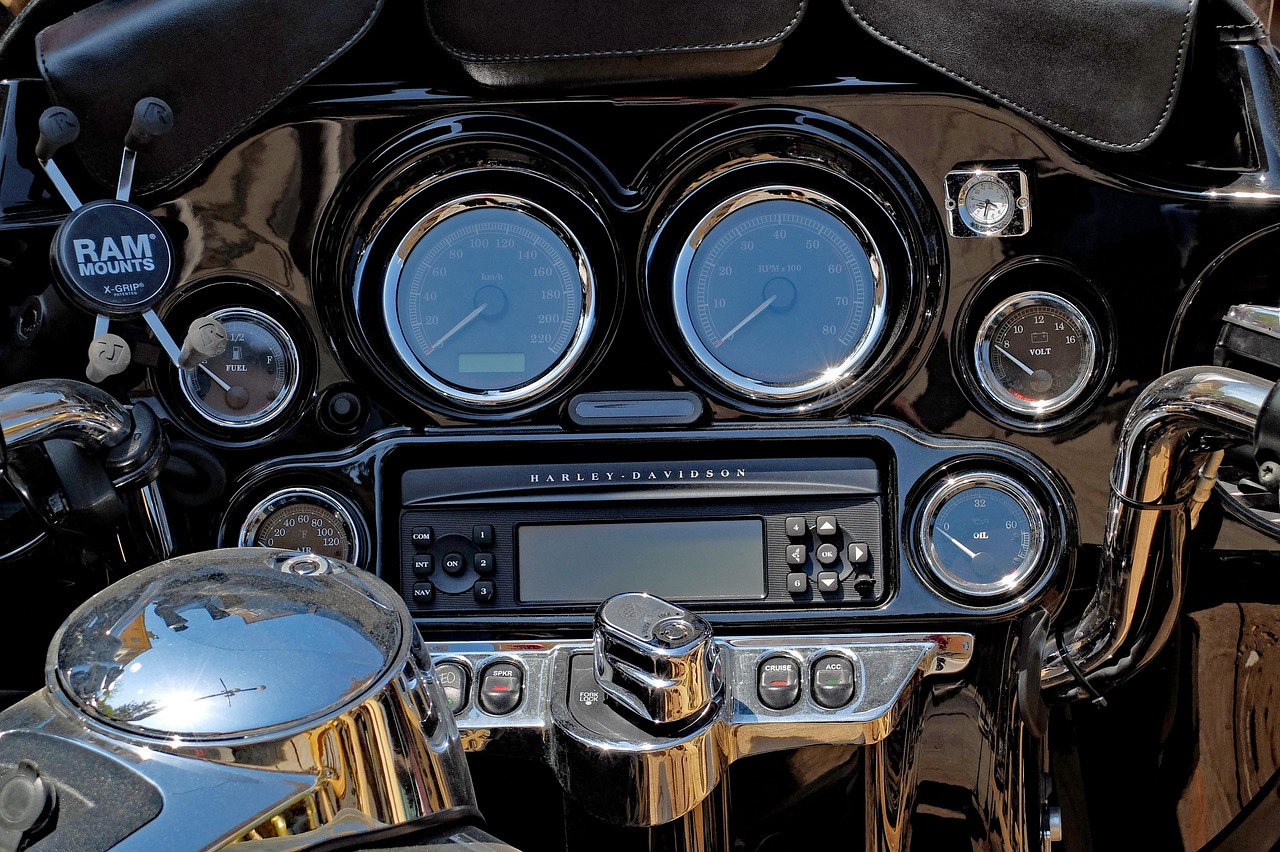
Think of it this way: your car’s speedometer shows instantaneous speed. It might read 70 mph on the highway and 20 mph in a city. Your average speed for the entire trip, including stops and varying traffic, will likely be much lower than any single instantaneous reading.
Understanding this distinction is vital. Instantaneous speed describes a moment; average speed describes an interval.
The Fundamental Speed Formula Unpacked
The basic formula for speed is elegantly simple: Speed = Distance / Time.
This equation holds true for both instantaneous speed (over a very short time interval) and average speed (over an extended period). The units must always be consistent. For example, if distance is in kilometers (km) and time is in hours (h), then speed will be in kilometers per hour (km/h).
Worth noting: The International System of Units (SI) standard for speed is meters per second (m/s), but practical applications often use km/h or miles per hour (mph).
Calculating Average Speed: The Total Distance Method
The core principle for calculating average speed is always the same: divide the total distance covered by the total time taken.
Average Speed = Total Distance / Total Time
This formula applies regardless of how much the speed changed during the journey. If a delivery driver covers 100 km in 2 hours, their average speed is 50 km/h, even if they sped up, slowed down, or stopped multiple times.
Average Speed Formula for Varying Segments: The Weighted Approach
Here’s where many people make a critical error. When a journey consists of multiple segments with different speeds, you can’t simply average those individual speeds. You must calculate the total distance and total time for the entire journey.
The wrinkle here: if you travel 50 km at 100 km/h and then another 50 km at 50 km/h, your average speed isn’t (100 + 50) / 2 = 75 km/h. This is a common and costly misconception.
Instead, calculate the time for each segment first:
- Segment 1: Time = Distance / Speed = 50 km / 100 km/h = 0.5 hours
- Segment 2: Time = Distance / Speed = 50 km / 50 km/h = 1.0 hours
Total Distance = 50 km + 50 km = 100 km
Total Time = 0.5 hours + 1.0 hours = 1.5 hours
Average Speed = Total Distance / Total Time = 100 km / 1.5 hours ≈ 66.67 km/h. This is significantly different from 75 km/h.
Speed vs. Velocity: A Critical Distinction
While often used interchangeably in casual conversation, speed and velocity are distinct concepts in physics. Speed is a scalar quantity, meaning it only has magnitude (e.g., 60 km/h). Velocity, on the other hand, is a vector quantity, possessing both magnitude and direction (e.g., 60 km/h North).
This distinction becomes crucial when discussing average velocity. Average velocity uses displacement (the straight-line distance from start to end, with direction) divided by total time. If you run a 400-meter lap and finish where you started, your total distance is 400m, but your displacement is 0m. Your average speed would be 400m divided by your time, but your average velocity would be 0 m/s because your net change in position is zero. According to Vedanta’s 2026 explanation, this difference is fundamental in understanding motion beyond simple scalar values.
Practical Applications Beyond Textbooks
Understanding the speed and average speed formula extends far beyond classroom physics. In real terms, this knowledge is invaluable for:
- Travel Planning: Estimating arrival times for road trips, especially with varying speed limits and potential stops.
- Logistics and Supply Chain: Calculating average delivery times for routes, optimizing fuel consumption, and setting realistic schedules for transportation fleets.
- Sports Analytics: Evaluating athlete performance over a race, not just their peak speed, but their sustained average.
- Data Transfer Rates: Understanding the average download speed over a period, especially when network conditions fluctuate.
For instance, a drone delivery service might need to calculate the average speed of its fleet across diverse urban and rural routes to guarantee delivery windows. As of July 2026, precision in these calculations directly impacts customer satisfaction and operational efficiency, especially for time-sensitive deliveries.
Common Mistakes in Average Speed Calculations
Even seasoned professionals can stumble when calculating average speed. The primary culprit is often treating it as a simple arithmetic average of speeds.
Here are the common pitfalls:
Arithmetic Average Fallacy
- Mistake: Adding up all speeds and dividing by the number of speeds, especially when distances or times for each segment are unequal.
- Solution: Always revert to the fundamental definition: Total Distance / Total Time. Calculate the total distance and total time for all segments separately.
Unit Inconsistency
- Mistake: Mixing units, such as using kilometers for distance and minutes for time, then expecting a speed in km/h without conversion.
- Solution: Ensure all distance units are the same (e.g., meters, kilometers, miles) and all time units are the same (e.g., seconds, minutes, hours) before applying the formula. Convert early and carefully.
Ignoring Stops or Delays
- Mistake: Only considering the time spent actively moving, neglecting periods of rest, refueling, or traffic jams when calculating trip average speed.
- Solution: For a true average speed of a journey, include all time from start to finish, including stationary periods.
Mastering Unit Conversions for Accuracy
Accurate calculations of speed and average speed hinge on consistent units. Converting units correctly is a non-negotiable step.
- Kilometers per Hour (km/h) to Meters per Second (m/s): Divide by 3.6. (e.g., 72 km/h / 3.6 = 20 m/s)
- Meters per Second (m/s) to Kilometers per Hour (km/h): Multiply by 3.6.
- Miles per Hour (mph) to Kilometers per Hour (km/h): Multiply by 1.60934.
- Kilometers per Hour (km/h) to Miles per Hour (mph): Divide by 1.60934.
Working with different units can be challenging. For complex calculations, consider converting all measurements to SI units (meters and seconds) before performing any operations, then convert the final result back to the desired unit. This minimizes errors. How to Convert 1 1/4 to a Fraction: A Step-by-Step Guide
A Step-by-Step Average Speed Calculation
Let’s walk through a scenario that illustrates the ‘weighted average’ necessity. Imagine a drone completing a delivery route:
- Leg 1: Flies 10 km at 40 km/h.
- Leg 2: Flies 5 km at 20 km/h (due to wind resistance).
- Leg 3: Flies 15 km at 50 km/h.
Here’s how to calculate the drone’s average speed for the entire journey:
- Calculate Time for Each Leg:
- Leg 1 Time (T1) = Distance / Speed = 10 km / 40 km/h = 0.25 hours
- Leg 2 Time (T2) = Distance / Speed = 5 km / 20 km/h = 0.25 hours
- Leg 3 Time (T3) = Distance / Speed = 15 km / 50 km/h = 0.30 hours
- Calculate Total Distance (D_total):
- D_total = 10 km + 5 km + 15 km = 30 km
- Calculate Total Time (T_total):
- T_total = 0.25 h + 0.25 h + 0.30 h = 0.80 hours
- Apply the Average Speed Formula:
- Average Speed = D_total / T_total = 30 km / 0.80 hours = 37.5 km/h
Notice how simply averaging the speeds (40+20+50)/3 = 36.67 km/h would give a slightly different, less accurate result. The total distance and total time method is solid.
Comparison: Speed, Average Speed, and Velocity
| Feature | Speed | Average Speed | Velocity |
|---|---|---|---|
| Definition | Rate of distance covered at an instant | Total distance / Total time over an interval | Rate of displacement over an interval |
| Type of Quantity | Scalar (magnitude only) | Scalar (magnitude only) | Vector (magnitude & direction) |
| Formula | Distance / Time (instantaneous) | Total Distance / Total Time | Displacement / Total Time |
| Dependence on Path | Yes | Yes | No (only start & end points) |
| Example | 70 mph on the speedometer | 35 mph for a 2-hour trip | 35 mph North for a 2-hour trip |
Pros of Mastering Average Speed Calculations
- Accurate Planning: Essential for logistics, travel, and project management.
- Performance Benchmarking: Objectively comparing efficiency over varying conditions.
- Resource Optimization: Better estimates for fuel, time, and personnel.
- Problem-Solving: A foundational concept for more complex physics and engineering problems.
Cons/Limitations of Average Speed
- Lacks Detail: Doesn’t reveal instantaneous speed variations or stops.
- No Direction: Being scalar, it provides no information about the object’s path or heading.
- Misleading for Round Trips: If an object returns to its starting point, average velocity is zero, which can be confusing if only speed is considered.
- Requires Full Data: Needs both total distance and total time, which aren’t always readily available.
Tips for Precise Speed and Average Speed Analysis
Having worked with complex data sets and real-world logistics challenges, I’ve seen how small errors in speed calculations can cascade into major operational issues. Here are some expert insights:
- Always Document Your Data: For multi-segment journeys, meticulously record distance and time for each leg. This prevents aggregation errors.
- Use Tools Wisely: Online calculators are useful, but ensure you understand the underlying formulas. Some might simplify assumptions, especially regarding varying speeds.
- Consider the Context: Is average speed truly the best metric? For route optimization in a city, average velocity might be more informative for navigating traffic flow. For fuel efficiency, average speed over the entire trip is key.
- Practice Unit Conversions: The more comfortable you are converting between km/h, mph, and m/s, the fewer errors you’ll make. Create a quick reference sheet.
- Double-Check Assumptions: Are you including rest stops in your ‘total time’? Is the ‘distance’ truly the path traveled, or just a straight-line approximation? Clarify these upfront.
For educational resources, Physics Catalyst in 2026 continues to offer valuable insights into these concepts, especially for students preparing for competitive exams like JEE Mains.
Frequently Asked Questions
What is the difference between speed and average speed?
Speed refers to how fast an object is moving at a particular instant (instantaneous speed), while average speed describes the overall rate of movement over an entire journey, calculated by dividing the total distance by the total time taken.
Can average speed be zero?
No, average speed can’t be zero unless the total distance traveled is zero. Even if an object returns to its starting point, it has covered a distance, meaning its average speed will be a positive value. Only average velocity can be zero if displacement is zero.
Why is calculating average speed important in real life?
Calculating average speed is crucial for practical applications like estimating travel times, planning logistics routes, assessing fuel efficiency, and analyzing performance in sports. It helps in making informed decisions about time, resources, and operational efficiency.
Does the direction of motion affect average speed?
No, the direction of motion doesn’t affect average speed because speed is a scalar quantity. Average speed only considers the magnitude of the total distance covered and the total time taken, without regard for the path or direction.
What are the common units for speed and average speed?
The most common units for speed and average speed are kilometers per hour (km/h), miles per hour (mph), and meters per second (m/s). The choice of unit often depends on the context and geographical region, but consistency within a calculation is paramount.
How do I convert between different speed units?
To convert km/h to m/s, divide by 3.6. To convert m/s to km/h, multiply by 3.6. For mph to km/h, multiply by 1.60934, and for km/h to mph, divide by 1.60934. Accurate conversions are essential for correct results.
Conclusion
Mastering the speed and average speed formula goes beyond academic exercises; it’s a fundamental skill for navigating a world in motion. By consistently applying the principle of Total Distance / Total Time, understanding the nuances of varying speeds, and meticulously handling unit conversions, you equip yourself to make far more accurate predictions and assessments. Embrace the weighted approach for multi-segment journeys, and you’ll find your calculations are not only correct but genuinely useful. The actionable takeaway here is to always break down complex journeys into their fundamental distance and time components before calculating any averages.
Information current as of July 2026. Knowing how to address speed and average speed formula early makes the rest of your plan easier to keep on track.
Related read: Conquering the Inch Dumbbell: A Strength Training Blueprint.
Related read: RREF Calculator: Mastering Matrix Operations Simply.